


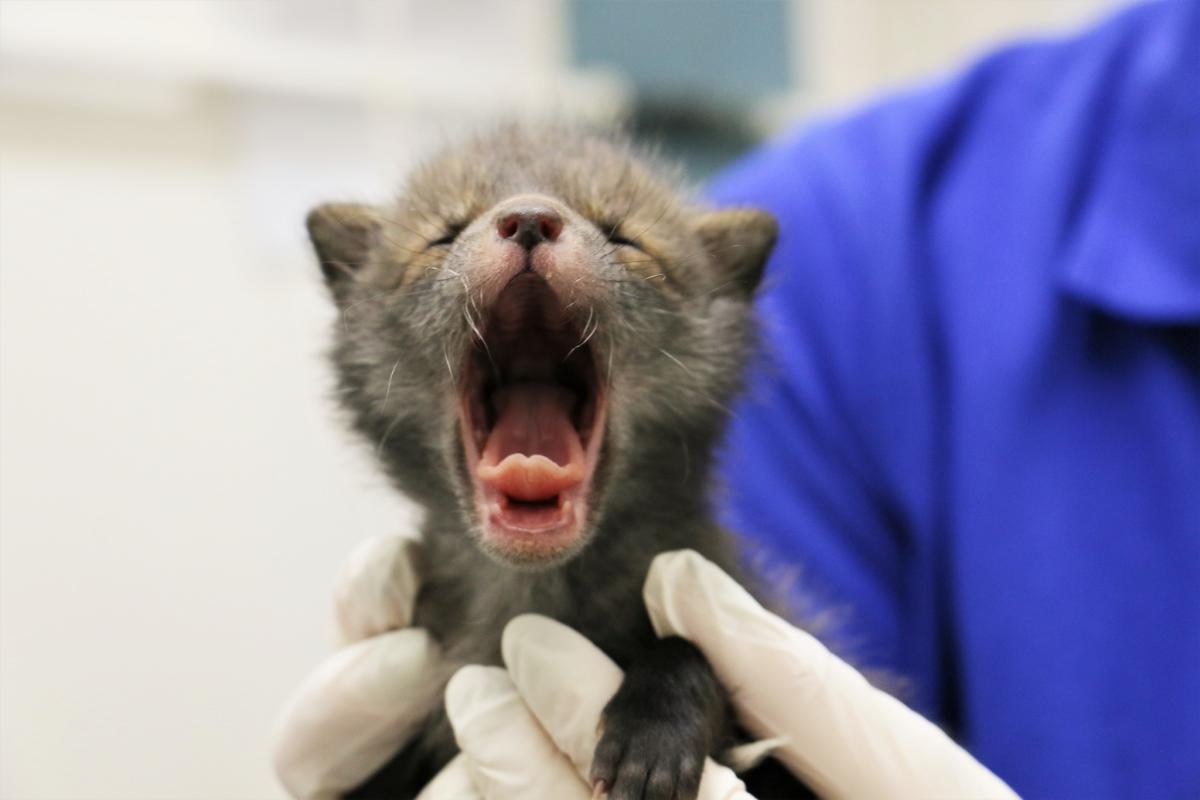

The RSPCA is preparing for a significant increase in young wild animal admissions this season.
The charity's Mallydams Wood wildlife centre in East Sussex saw a 134 per cent rise in baby wildlife intake, from 450 in 2023 to 1,056 in 2024.
Across all RSPCA wildlife centres, the number of baby wild animals admitted almost doubled from 787 in April to 1,356 in May, eventually peaking at 1,766 in July.
The RSPCA also reported a 35 per cent increase in all wild animal admissions in 2024, with 10,209 compared to 7,520 in 2023.

Successful rescues of some young wild animals can be time-critical, so the faster they can be found treatment, the more likely there will be a successful outcome for them.
However, other young animals, such as fledgling birds, may not need rescuing at all.

RSPCA scientific officer Rebecca Machin said: "We see a sharp rise in the number of young wild animals coming into our wildlife centres at this time of year.
"From orphaned and sick baby hedgehogs and young rabbits, to fox and badger cubs, our centres are flat-out trying to care for the flood of babies.
"And it’s a growing problem, with a 35 per cent rise in all wildlife admission numbers last year, compared to 2023."
The RSPCA is encouraging the public to be "wildlife smart" and to take any orphaned or injured small animals that are safe to handle directly to a vet or to one of their four wildlife centres in Cheshire, Norfolk, East Sussex, or Somerset.
Ms Machin added: "We also urge the public to be aware that some animals who look vulnerable may actually be better left alone.
"Fledgling birds and young foxes are often being watched over by their parents, and don’t need help from us."
The RSPCA has also provided ten top tips on how people can help young wild animals themselves.
These include taking smaller animals that need help, such as orphaned or sick baby hedgehogs, garden birds, and young rabbits and hares, directly to a nearby vet or wildlife rescue centre.
People are also encouraged to leave and encourage ‘wild’, insect-friendly areas in the garden to encourage insects and plant a range of native plants, to encourage pollinators such as bees, hoverflies, and butterflies.
The RSPCA also advises against using netting to cover ponds, fruit, or vegetables as animals can become easily entangled, causing serious injuries and sometimes death.
The charity also encourages people to check carefully for animals before mowing or strimming the lawn, and never to disturb nesting or hibernating animals.
The high intake of baby wild animals at RSPCA centres follows a busy year for the charity on the frontline.
Across England and Wales, 3,553 incidents relating to young wild mammals and birds were reported in 2024.
The majority were relating to sick or orphaned young.
Reports were most common from Greater London (705), West Midlands (117), Surrey (109), Essex (98), Kent (97), Hampshire (95), Greater Manchester (69), East Sussex (69), West Yorkshire (65), and Leicestershire (65).
The charity’s four wildlife centres are RSPCA Stapeley Grange in Nantwich, Cheshire, RSPCA East Winch in King’s Lynn, Norfolk, RSPCA Mallydams Wood in Hastings, East Sussex, and RSPCA West Hatch in Taunton, Somerset.


Share