


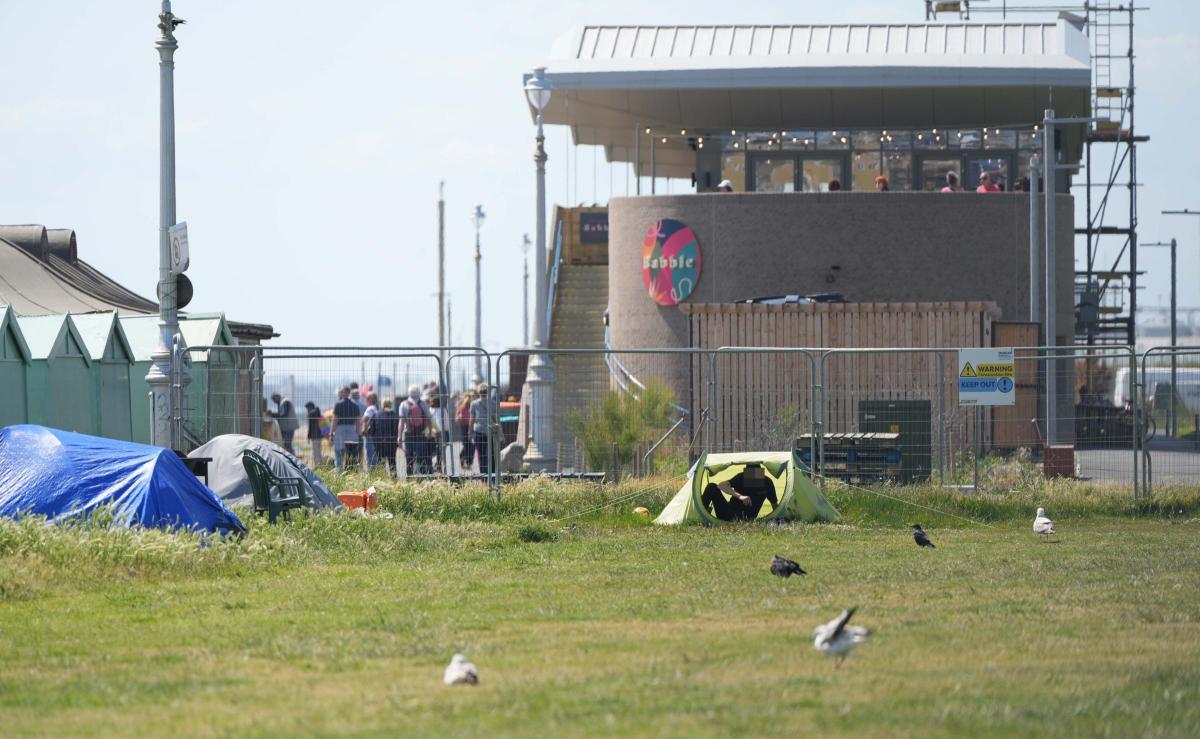
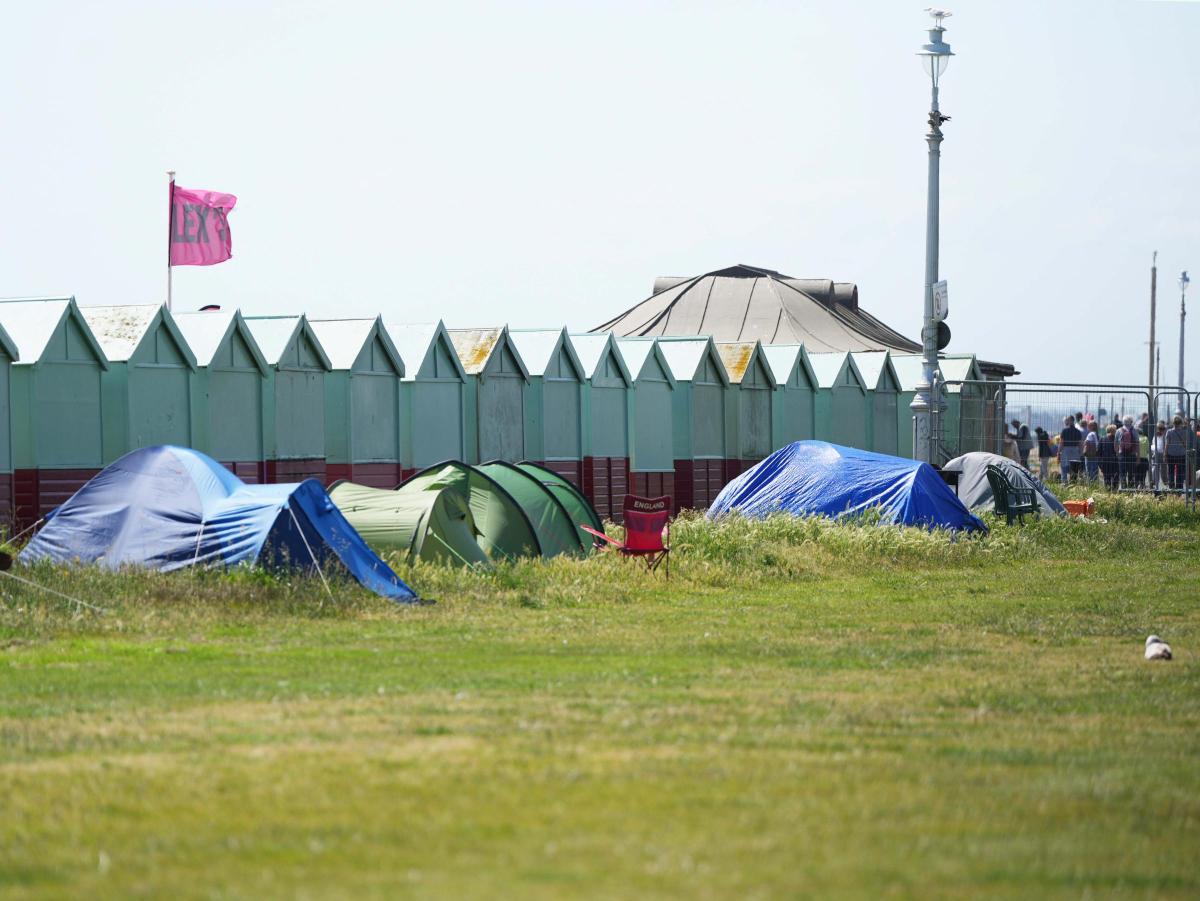
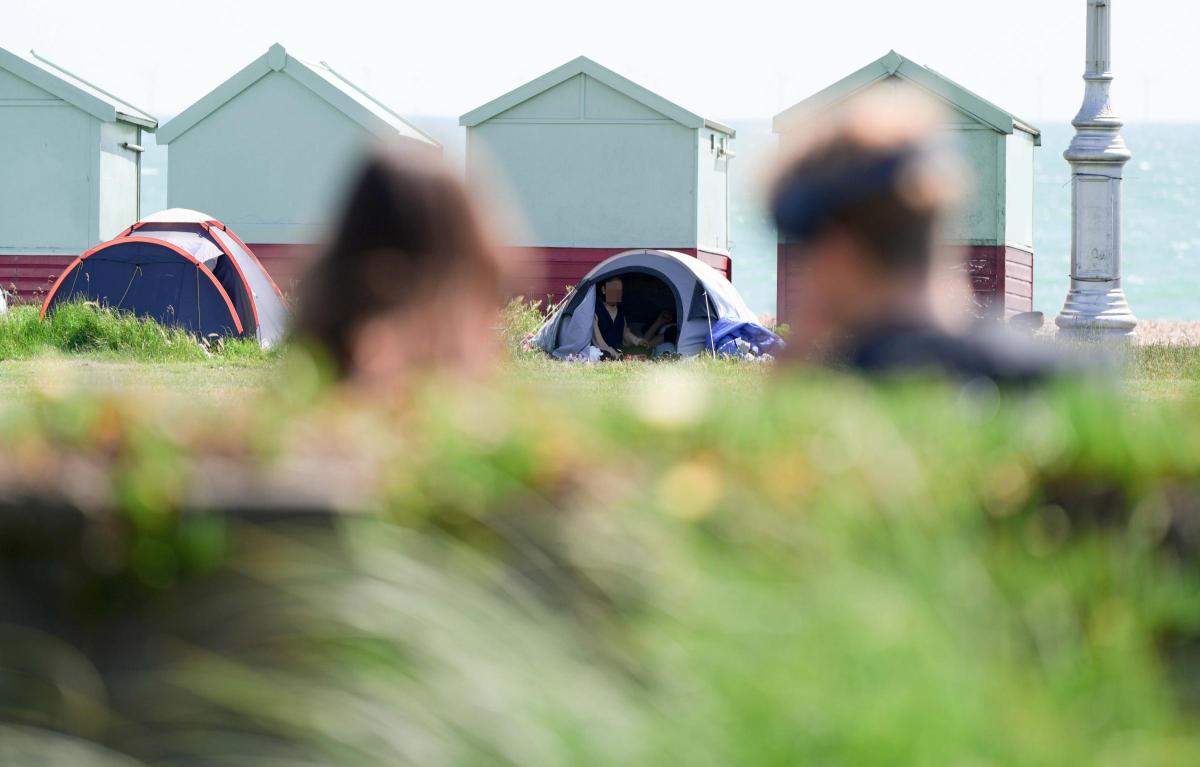


The amount of rough sleepers living in tents on the seafront is said to be increasing and the battle is on to get the number of homeless people down.
Dozens of tents have been erected in the last year, with Brighton and Hove City Council saying it has been left unable to remove them due to legal action not being a "quick process".
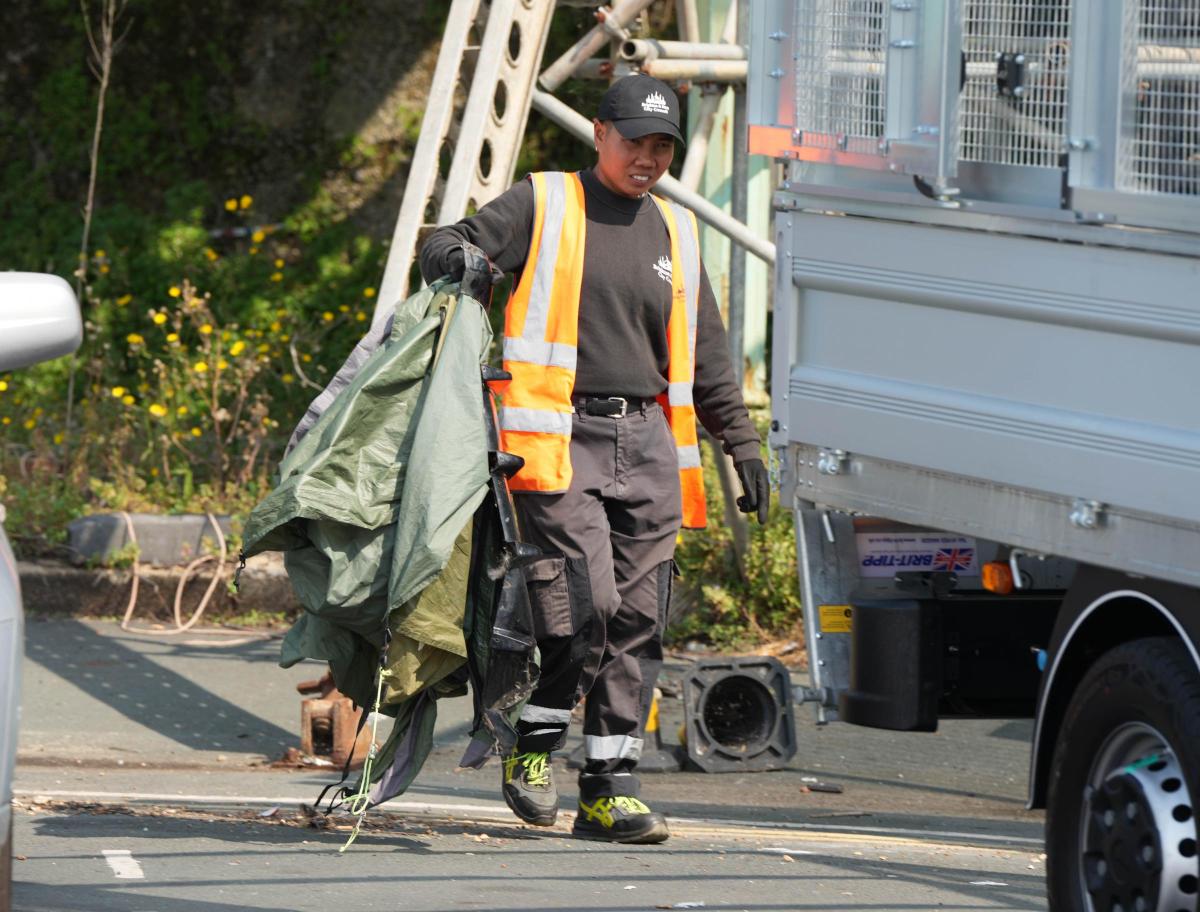
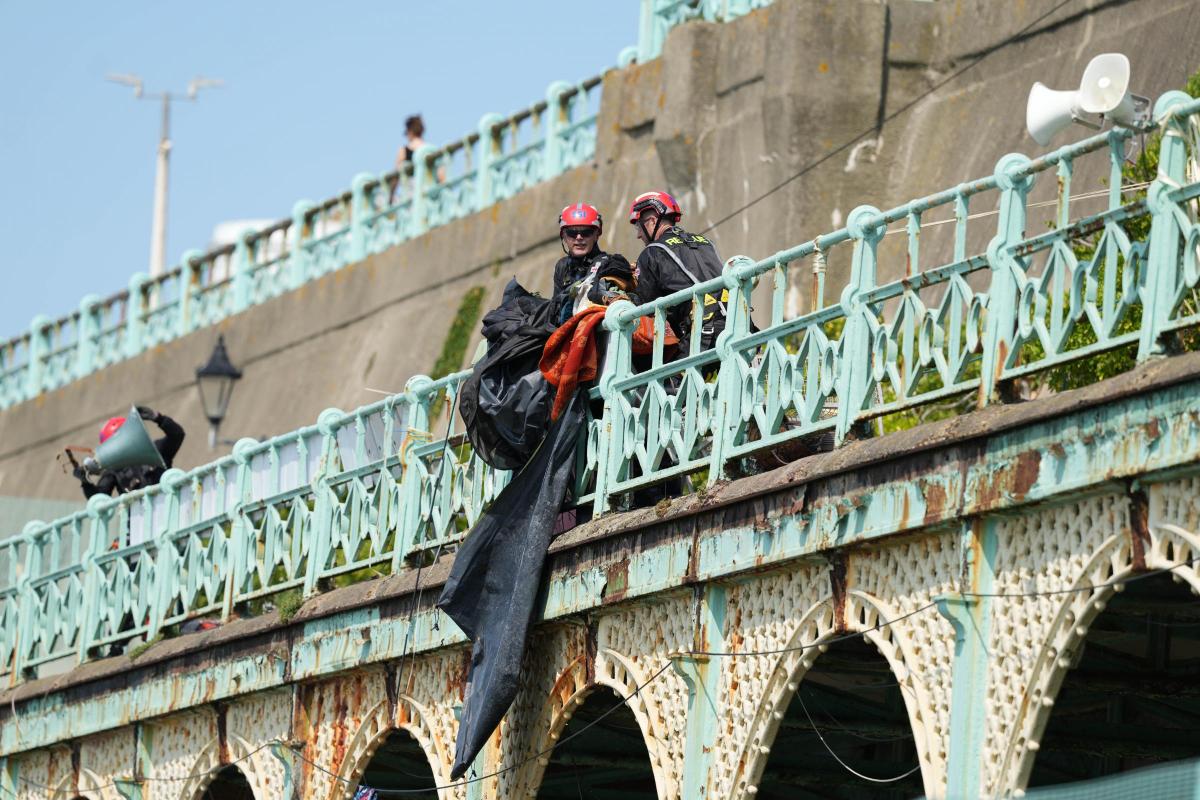
The issue came to a head on August 6 when the council hired two private specialist companies to remove a tent encampment in Madeira Terrace, Brighton, which cost taxpayers more than £36,000.
Today we report on the factors impacting the issue and how the authorities are trying to help people off the streets.
Through various interviews conducted by The Argus with the council, politicians, unions and charities we take a look at what is causing the increase of rough sleepers using tents across the city, and what could be done to tackle the issue.
This revealed that:
- 7,500 households are on Brighton and Hove's waiting list for social housing, with a 3.3 years average wait to be housed and 6.2 years average wait for a 3-bedroom socially rented house.
- More than 1,900 households are in temporary and emergency accommodation.
- The council is buying back homes at a rate of one per week to provide housing.
The council's approach to rough sleepers:
Councillor Gill Williams

The council has made a draft plan to tackle homelessness and rough sleepers for the next five years.
The report revealed there were roughly 76 people sleeping rough as of November 2024, and that almost 3,600 people in the city were experiencing homelessness in June 2024.
Due to this the council will shift its approach to a longer-term focus on “prevention and early intervention” for rough sleepers and homelessness, which will result in “difficult decisions” in the short term.
"We've had over 2,500 households coming to us asking for help in the last year," Councillor Gill Williams, cabinet member for housing, told The Argus.
"That includes families, single people as well. So we are dealing with a huge amount of enquiries, which I'm pleased to say we are getting through.
"We found in early 2025, there were 704 people homeless with two or more, what we call, compounding needs. So that could mean it's not just about homelessness or rough sleeping, it's also about their health.
"There could be substance misuse, there could be an offending history, there could be domestic violence, there could be refugees, all sorts of different needs.
"It's not just about having a roof over somebody's head. It's about also finding help and support for those different needs that people have."

The rough sleepers draft also showed that around 7,500 households are on the waiting list for social housing, reaching “unprecedented levels”, with a 3.3 years average wait to be housed and 6.2 years average wait for a 3-bedroom socially rented house.
The council has said that it has allocated £28 million to meet the cost of temporary accommodation this year, but It is likely to “significantly overspend” – it also anticipates that it will lose grant funding from the government to help with homelessness prevention.
Cllr Williams added: "There are huge financial pressures. We also have over 1,900 households in temporary and emergency accommodation and this is a huge cost.
"If somebody comes to us and they are homeless, we have a duty to find them somewhere as quickly as possible.
"We're really working hard to reduce that. So we're increasing the supply of council-owned temporary accommodation, and also ramping up our supply of council homes by buying back ex-council homes at the rate of about one a week."
Dozens of tents have been erected in the last year across the seafront and the council has had to find a different approach to remove them due to legal action not being a "last resort".
Cllr Williams explained that the council has adopted a "three visit protocol" to ensure that the welfare of the rough sleepers is the "upmost priority".
She added: "Every summer, there is an increase in these encampments.
"We operate a three-visit protocol. So we get three opportunities, because sometimes people don't want to engage.
"They get worried or concerned.
"We say you can't camp here because it's dangerous and we had some very dangerous encampments on the Madeira Terraces.
"We have to remove those, unfortunately, for the well-being of those people. But it's really important that we understand why they're there, who they are, what do they need?
"If you are a rough sleeper, we will offer you something off-street.
"It might be temporary, it might be just for the night, and we might have to move you again. But we can offer you something, and that is what we do with people that are intense."

The cabinet member for housing explained that if the council can't move the tents it "has to go down" the route of obtaining a court order, but emphasised it's "not the first resort" because it's "expensive and time-consuming" for the council..
She added: "We do try to help those people but where it's particularly causing a danger or a distress then that is what we will do."
Acorn Union - No fault evictions and 'London-esque' rents cause for homelessness

Toby Sedgwick, Brighton organiser for community union Acorn, claimed that there are a lot of people presenting to the council as homeless with "nowhere else to go" because of Section 21 evictions from the private rented sector.
A Section 21 notice, often referred to as a "no-fault" eviction notice, is a means for a landlord to end a tenancy without needing to give a reason, but they must follow legal duties for the notice to be valid.
Toby said: "I know at one point in Brighton that ten people a day were presenting as homeless to the council.
He said they ask for help at the council office at Bartholomew House in Brighton.
"They're literally just turning up at Bartholomew House just saying, I'm homeless, I've got nowhere to go" he said.
"That's ten people every day, that's colossal. And then the other thing that's particular to Brighton and Hove is the high rents.
"Brighton has one of the highest rents in the country after some places in central London.
"This is obviously a massive issue because quite often people who are struggling, especially if they're on universal credit, the universal credit does not cover the rent at all."
Government data released in August shows that 11,400 households in England were removed from their homes by bailiffs as a result of a Section 21 no-fault eviction between July 2024 and June 2025, an 8 per cent rise on the previous year.
The figures, published by the Ministry of Justice, also show that more than 30,000 Section 21 no-fault eviction notices were issued by private landlords in England during the same period.
Shelter, a charity which campaigns for the right to a safe home and helps those affected by the housing emergency has said no-fault evictions are one of the leading causes of homelessness, .
Mairi MacRae, director of campaigns and policy at Shelter, said: “For far too long, tenants’ lives have been thrown into turmoil by the rank injustice of no fault evictions.
"At the whim of private landlords, thousands of tenants are being left with just two months to find a new home, plunging them into a ruthless rental market and leaving many exposed to the riptide of homelessness."
Toby added that even if there's a "small rent increase" it can force people to have to move out as they cannot afford the rent anymore, placing them at a risk of becoming homeless.
He said: "Then what happens is they go to the council for support. And because they weren't addicted to drugs or drink and have chosen to leave rather than get into debt with rent arrears, they're classed as voluntarily homeless.
"They're classed as having made themselves homeless."
In an interview with The Argus in April, Peter Kyle, Labour MP for Hove and Portslade, emphasised that young people moving out are being forced to move to London because it's "cheaper" than living in Hove.
“People want us to be a city where young people can grow up, leave home, but stay local if they want to," he told The Argus,
“And increasingly we're a city where people leave homes and have to leave the area because they have to, because they can't afford to stay. And that's not how it should be."
According to the Office for National Statistics, private rents rose to an average of £1,799 in Brighton and Hove in February 2025, an annual increase of 5.1 per cent from £1,712 in February 2024.
In contrast, private rents rose to an average of £1,494 in Croydon and £1,604 in Bromley – both easily and quickly accessible to the capital via public transport.
Peter Kyle MP for Hove and Portslade - 'Homelessness should be eradicated'
Peter Kyle MP for Hove and Portslade
On the issue of rough sleepers and especially tents being used by people across the city, Mr Kyle told The Argus: "No one wants to see homeless people in tents on our seafront, or anywhere in the city.
"The first reason has to be for safety - it’s simply not safe to live like this. But then there are the myriad of other reasons around tourism and local residents.
"In the current situation everything is revolving around legal issues, which is fair enough, but is certainly taking far too long. These things should be resolved quickly by the courts in order to get the services needed to those in the tents - and crucially begin their home and intervention turn-around.
"Longer term, I want to see the eradication of homelessness. This would obviously end tent dwelling too. And this is not a pipe-dream. Labour did it once - after four years in Government Tony Blair’s team had already reduced rough sleeping by two thirds.
"This Government at its heart wants a move from bringing people off the streets temporarily, to actually fixing their problems and intervening in their lives to turn them around."
The annual rough sleeping count for England published by the ministry of housing, communities and local government (in February 2025) found that rough sleeping has increased by 20 per cent since the previous year, and 91 per cent since 2021.
Francesca Albanese, executive director of policy and social change at the charity for people experiencing homelessness, Crisis, told The Argus: “The number of people experiencing homelessness is increasing across the country, from families forced to live in temporary accommodation to people with no option but to sleep on the streets. The conditions many find themselves in are appalling. We need to reflect on the kind of country we want to be and do more about the uncertainty and precarity too many are facing.
“We urgently need new social and affordable housing. The Westminster Government has pledged the biggest boost in a generation, alongside significant new funding. Having lost 180,000 social homes in the past 10 years, we need to see serious progress on this as soon as possible, with a focus on offering social homes to people experiencing homelessness.
“Current rates of housing benefit do not often cover even the lowest local rents. Ministers need to unfreeze and increase these rates and enable people to stay in their homes. We also need to see ministers publish their long-awaited homelessness strategy, and make sure it is both ambitious and backed by departments right across government.”


Share