


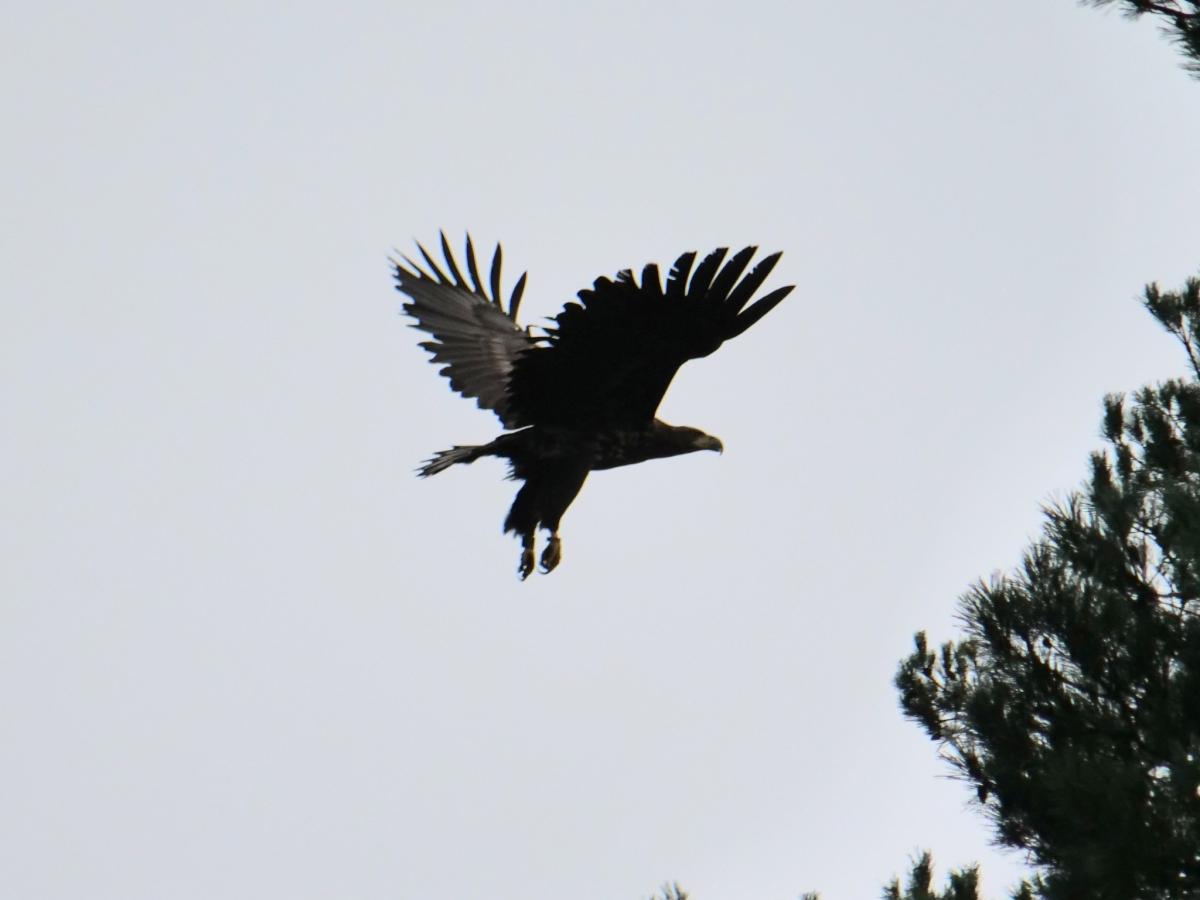
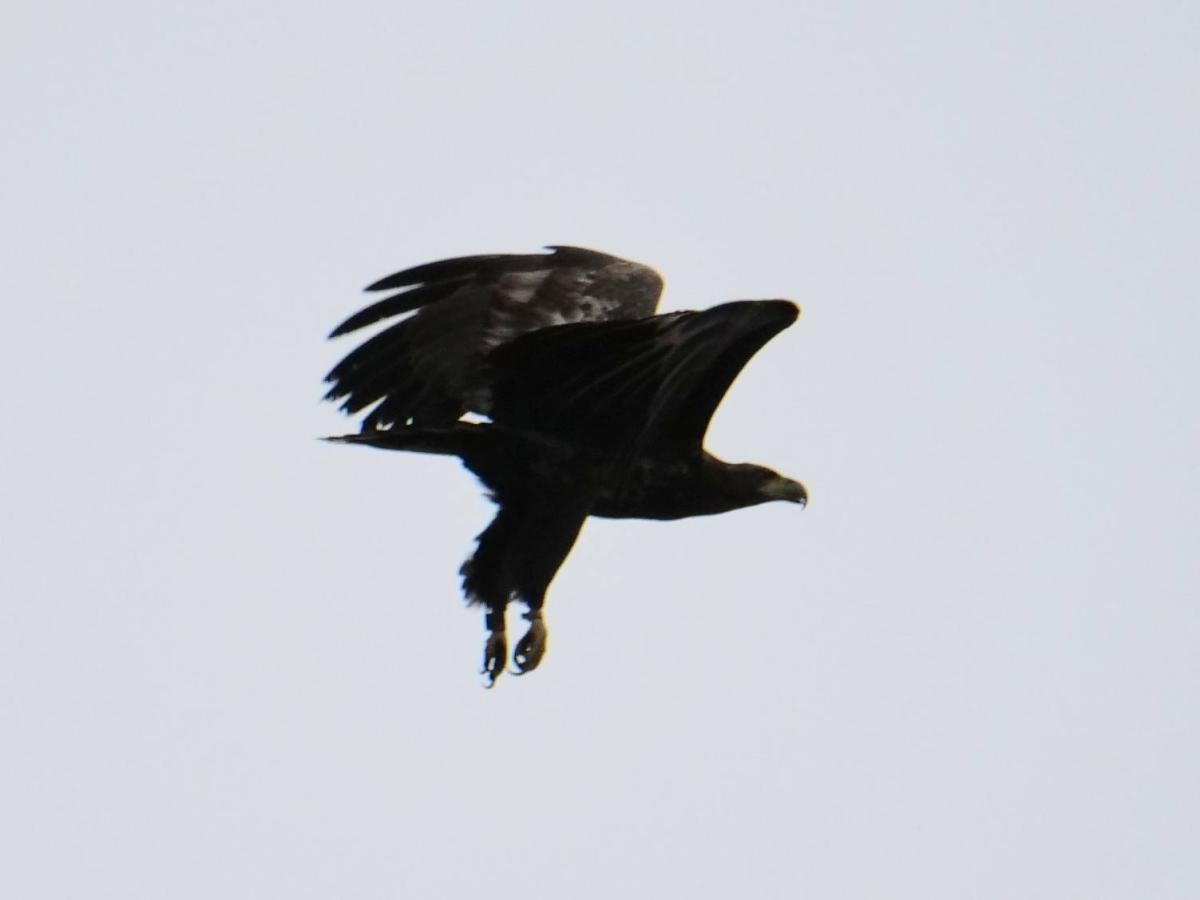


The UK's largest bird of prey has been sighted in Sussex.
A white-tailed eagle, also known as a sea eagle, was spotted in Ashdown Forest on Tuesday morning, November 11.
The vast bird was seen by Kent resident Michael Tulley in the forest's Old Lodge Nature Reserve.
"It flew overhead, perched on a tree, then flew off again", Michael said. "It was huge!"

He later reported the sighting to the Roy Dennis Wildlife Foundation, who confirmed that the bird was a white-tailed eagle.
Able to recognise a tag on her leg, the foundation also confirmed that the bird was a female who had fledged from the Isle of Wight in 2021.

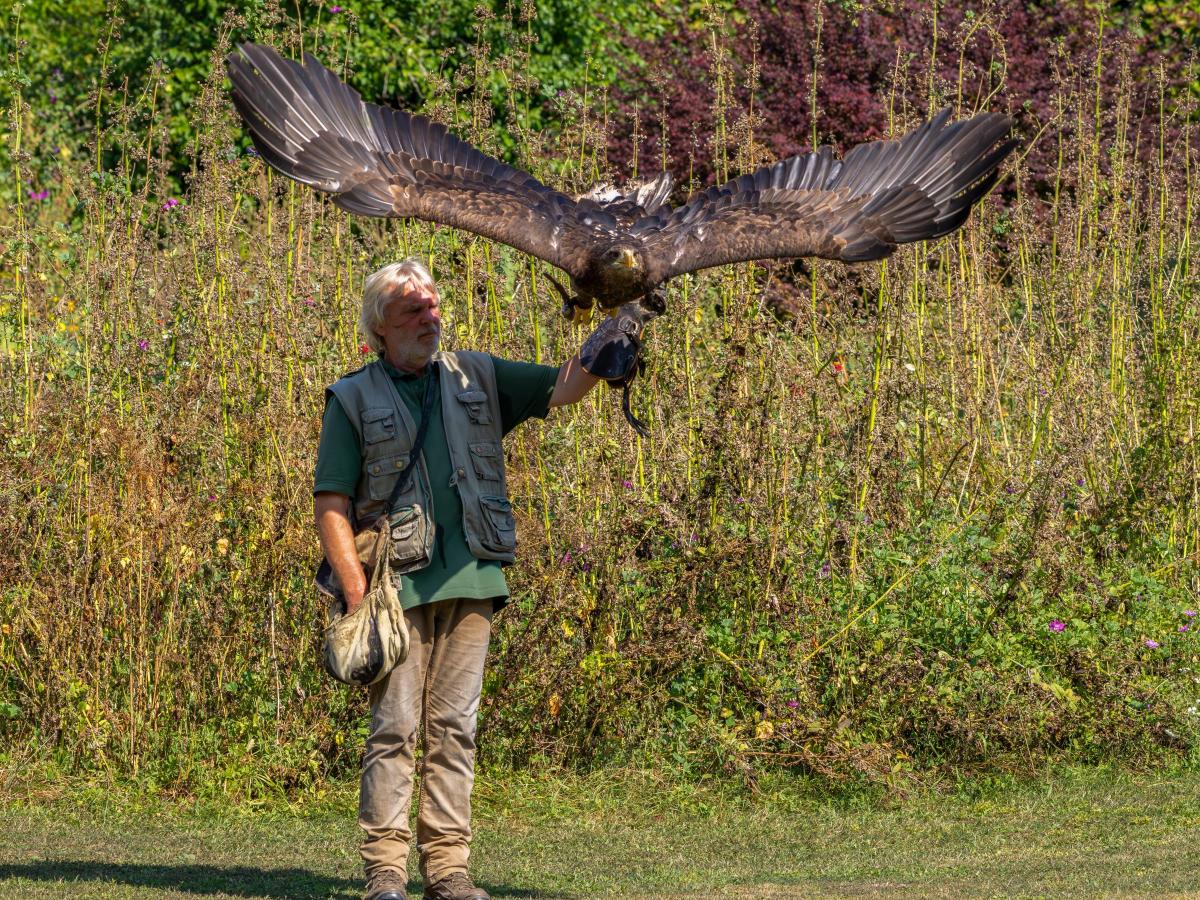
The white-tailed eagle, the UK's largest bird of prey, was persecuted to extinction but has been successfully reintroduced in Scotland and more recently, the Isle of Wight.
This massive bird is sometimes referred to as the 'sea eagle' and preys on fish, mammals and small birds.

In the 1970s, it was reintroduced from Norway and now more than 100 pairs nest in Scotland.
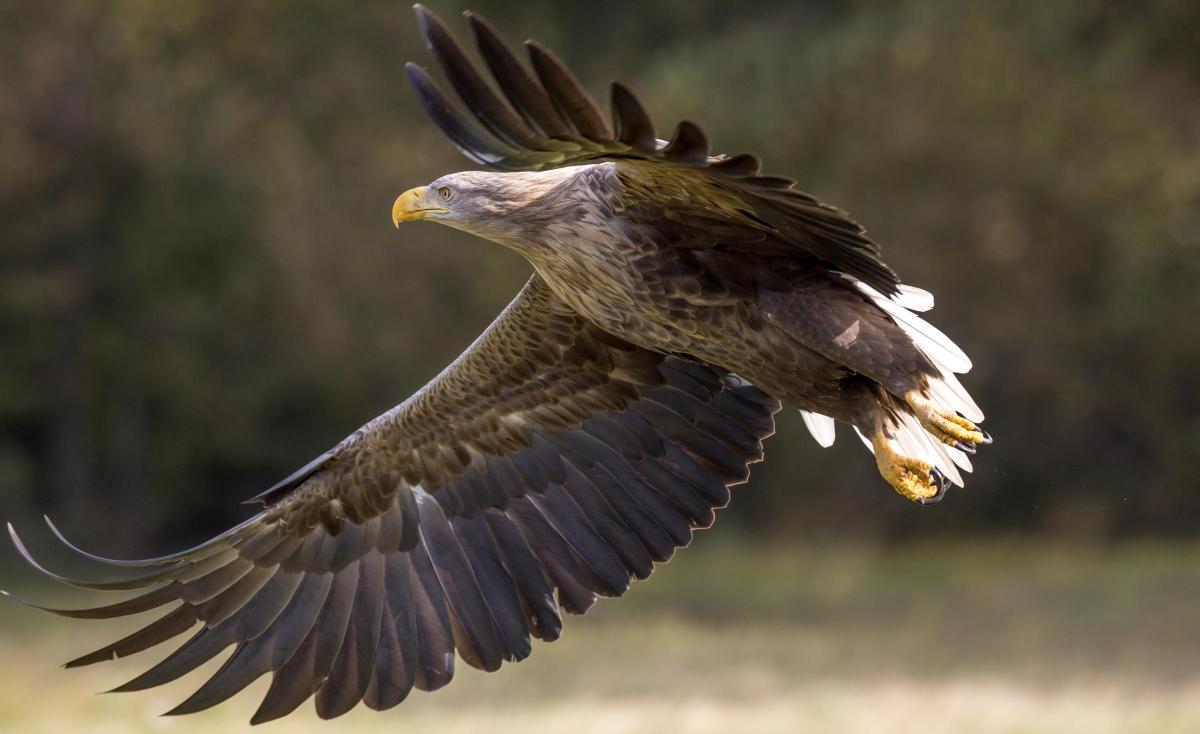
The white-tailed eagle has broader wings than the golden eagle, with which it shares its home.
Adults have a white, wedge-shaped tail and a pale head with a huge yellow bill. They are more likely to be found near the coast than the golden eagle.

Read more:
- Warning issued after 'toxic balls' wash up on popular beach
- Fire breaks out on 33,000-ton cargo vessel
- Plans approved to build three blocks of flats at railway station

Thirty-seven white-tailed eagles were released on the Isle of Wight in 2019. The birds, which have a wingspan of up to 2.5m (8.2ft), are being monitored by the Roy Dennis Wildlife Foundation.
The Old Lodge Nature Reserve, where the bird was spotted, lies in the heart of Ashdown Forest.
According to the Sussex Wildlife Trust, its character is subtly, but noticeably, different from the true lowland heath of Iping Common.
It sits about 500 feet higher, enough to make it markedly cooler.


Share