



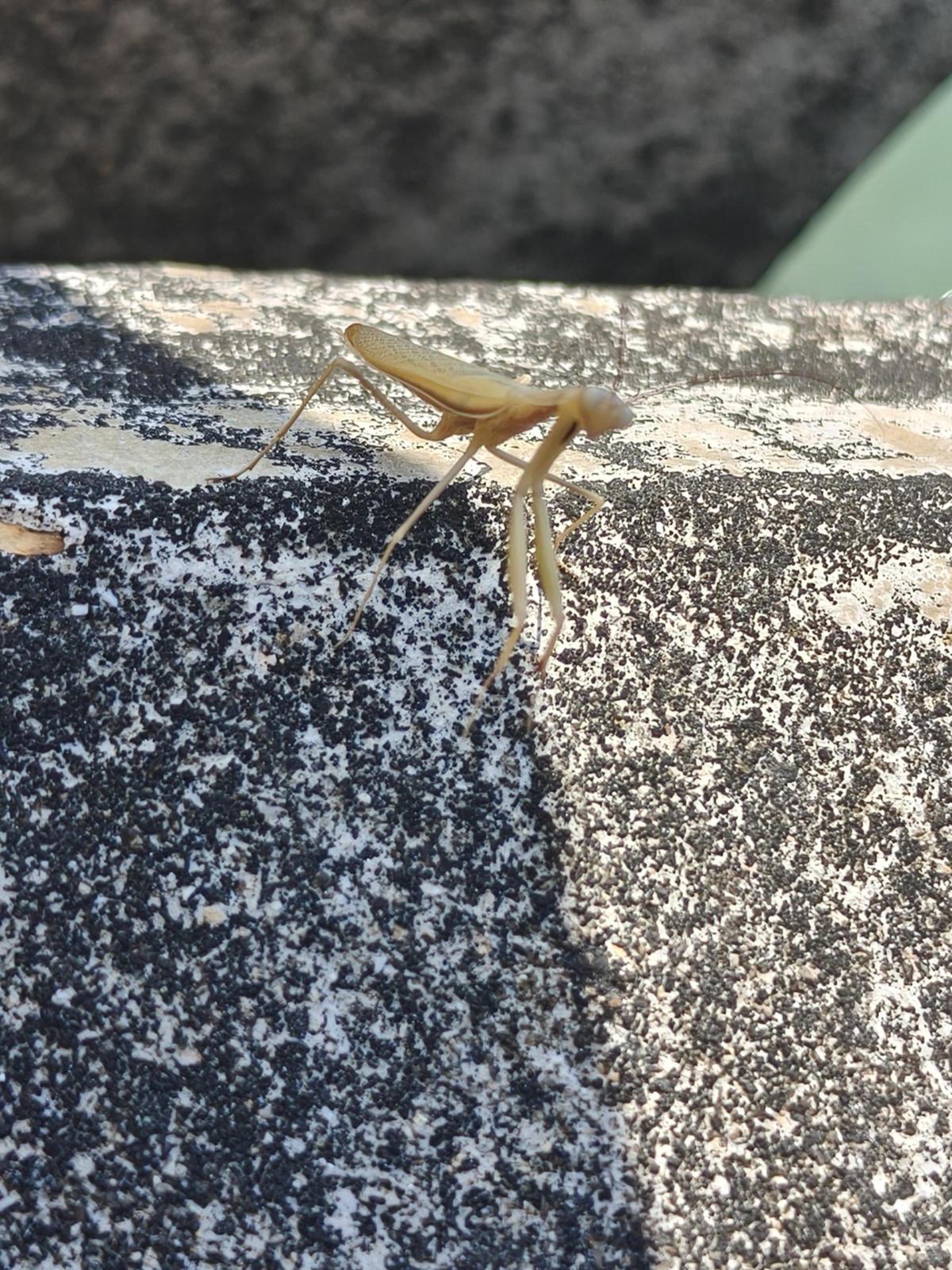
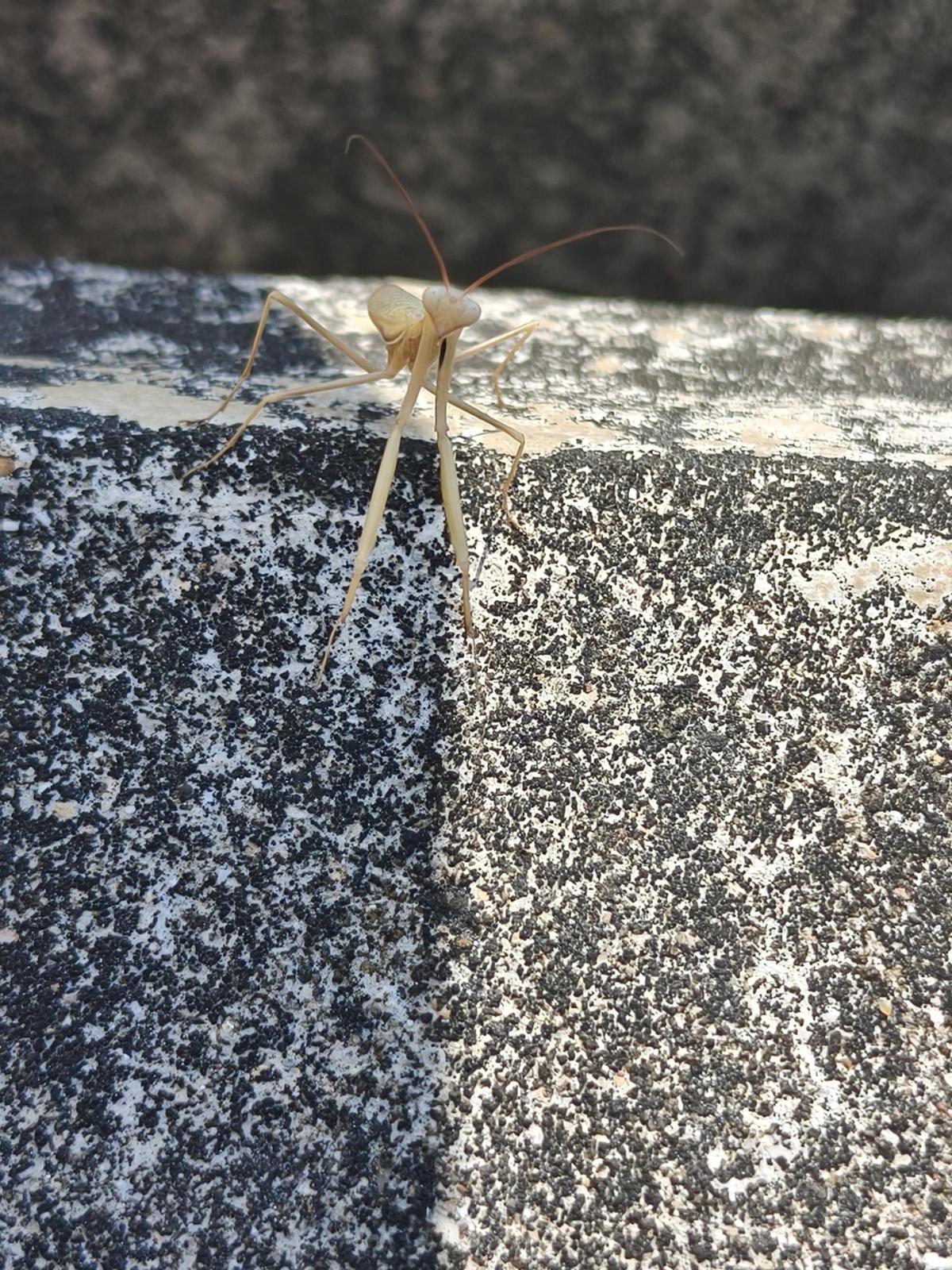


A young girl has spotted a rare, non-native insect while out walking on the Sussex coast.
Five-year-old Isabelle found a praying mantis while with her mum on the undercliff path between Rottingdean and Saltdean, near Brighton, on a recent day out.
Eve Rice said that she and her daughter were walking home when Isabelle shouted for her to come and see the "weird bug" she had found.
Ms Rice added that Isabelle was very excited about her find, which they photographed before it flew off towards the cliffs.

Ms Rice said: "I didn't even know they could fly.
"I've never seen one before, especially not here."
Praying mantis are distinctive predatory insects known for their large eyes, triangular heads and front legs, which they hold in a folded "praying" position.

They feed on a wide range of insects and are harmless to humans - although they can be surprisingly feisty if startled and may use their powerful front legs to defend themselves.
A spokesperson for the Sussex Wildlife Trust said: "Praying Mantis are very strong fliers, and given suitable conditions they could make it across the Channel from Europe.
"We had two records of Praying Mantis in Sussex in 2025, both from coastal locations.
"Although you might expect them to be bright green, they can be variable in their colouration, as the sighting of this individual shows.
"We can't be sure of whether the recent heatwave is responsible for sightings of this particular species, but we do know that the effects of climate change, such as extreme heat and drought events, can drive wildlife far from their usual range."
Read more
The 5 unusual marine animals seen in Brighton and Hove waters
Invasive plant hotspots revealed across Sussex in new ranking
Rewilding champion calls for more wild spaces across the UK
While common in sun-soaked parts of southern Europe, praying mantises remain a rare sight in the UK, making Eve and Isabelle's encounter an unusual find for local wildlife enthusiasts.
Recent sightings elsewhere in southern England have led experts to suggest the species could become more common in Britain in the years ahead.
The Trust encourages the public to record any wildlife sightings - "whether unexpected or ordinary" - to their Sussex Biodiversity Records Centre via the iRecord website or app.


Share