




"Irregularities" were visible on a section of track before a train derailed there last week.
The Rail Accident Investigation Branch has published an interim report into the derailment of a Southern passenger train near Lewes on Thursday, August 13.
The report said CCTV from rail services which had used the line earlier that day showed "a track geometry irregularity" on the immediate approach to the point where the train derailed.
Investigators also said there was evidence of previous track maintenance activity in the area.
The findings come after The Argus reported that Southern had announced a safety inspection of the track between Lewes and Haywards Heath the day before the derailment.

At 5.46 pm on Wednesday, August 12, Southern posted on X: "A safety inspection of the track is taking place between Lewes and Haywards Heath."
The rail operator added that northbound services through the area could be delayed by up to 15 minutes.
However, it has not been confirmed whether the section inspected on Wednesday was the same area of railway where the derailment happened the following day.
The RAIB interim report said: "CCTV images obtained from preceding services using these lines on August 13 show that a track geometry irregularity existed on the immediate approach to the point of derailment, prior to the accident occurring.
"There was also evidence of previous track maintenance activity in this area.
"Following the accident, RAIB has received several reports of rough riding at the location of the derailment from passengers on other trains.
"RAIB continues to analyse evidence relating to the derailment sequence and the status of the track."

James MacCleary, Liberal Democrat MP for Lewes, said the findings raise "serious concerns".
He said: “The full investigation must establish exactly what caused this derailment, but these preliminary findings raise serious concerns.
"A pre-existing irregularity on the track is deeply concerning.
"I travel this line very regularly and reported to the authorities just how bumpy this section of track had become. We cannot assume that this is related, but that makes the current findings even more troubling.
"We need clear answers about the condition and maintenance of this line – and the investment needed to ensure passengers have the safe, reliable railway they deserve.”
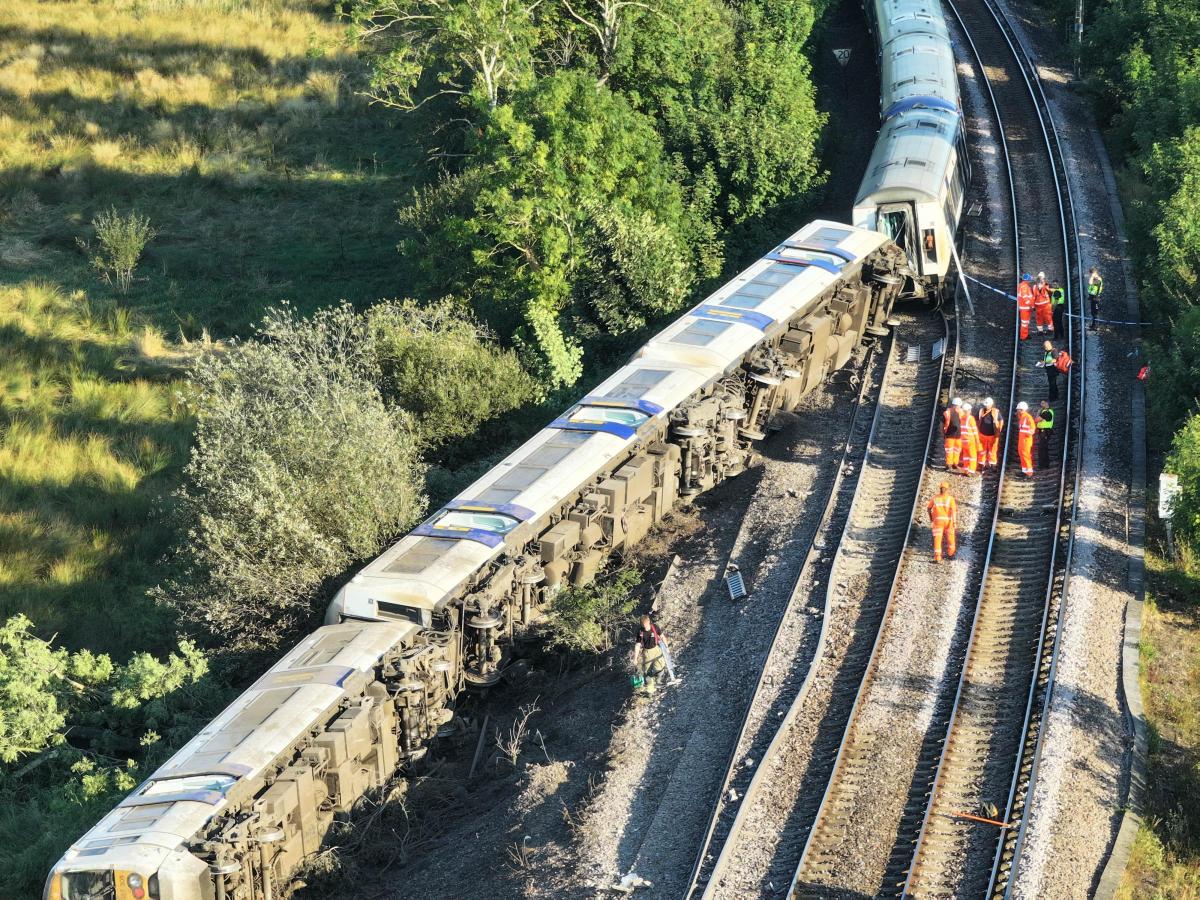
The derailment happened at around 3.54 pm on Thursday, August 13, about one mile north of Lewes station.
The train involved was the 2.24 pm London Victoria to Eastbourne service, operated by Southern, part of Govia Thameslink Railway.

It was made up of eight vehicles, with the rear three derailing and overturning during the accident.
The derailed carriages came to rest on their sides on the railway embankment, while the front five vehicles did not derail.
Around 150 people were on board the train when it came off the tracks. Thirty people were injured, with 20 requiring hospital treatment. Some passengers suffered serious injuries.
The RAIB said significant damage was caused to the train and to railway infrastructure.
Investigators were notified of the accident at 4.02 pm and deployed inspectors and support staff to the scene, with the first inspectors arriving at 7.11 pm.
The branch said its team worked alongside British Transport Police, the Office of Rail and Road and railway companies to secure and recover evidence.
The accident happened on Network Rail’s East Coastway line between Cooksbridge station and Lewes Tunnel.
Preliminary analysis of data from the train’s on-train data recorder, sometimes known as the black box, showed the train was travelling at around 65 mph as it approached the point of derailment.

The weather on the day of the accident was hot and sunny, with little wind.
The RAIB said the nearest weather station, at Brighton City Airport, recorded an air temperature of around 27C at the time of the derailment.
The accident took place during a sustained period of hot and dry weather.
The report said the embankment on which the railway runs is made of clay and sits on alluvial deposits, consisting of loose clay, silt, sand and gravel.
Both are sensitive to variations in water content and may move as moisture levels change.
Read more
'An utter disgrace' - furious row erupts over 'totally neglected' churchyard
In pictures - huge emergency response after four get into difficulty at harbour
Police give update after 'four people in difficulty in water' prompt huge response
The RAIB said: "Although, at this stage, there is no evidence to indicate that a significant embankment slip occurred before the accident, there is evidence that some movement had previously taken place."
Investigators said the recovery of the train will be complex.
The derailed vehicles will need to be lifted by rail crane and moved by road to secure storage.
The RAIB said some of the information in its interim report may be refined as the investigation progresses.
It added that its investigation is independent of any investigation by the railway industry or the Office of Rail and Road.
The branch will publish its full findings, including any safety recommendations, at the end of the investigation.


Share