

Pride is a fixture of life in Brighton and Hove and now, in it’s 20th year, we look at how the festival has progressed and the positive impact it’s had on attitudes to the LGBT community in our city. BEN PARSONS reports.
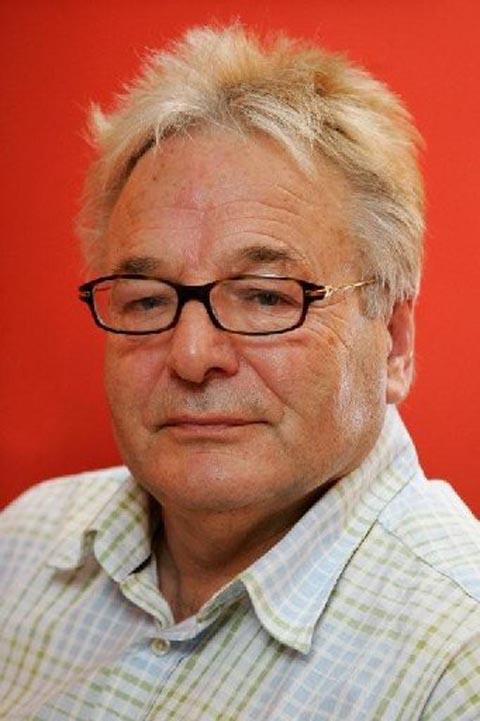
At a Brighton Festival parade in the late 1960s Brian Ralfe stood on the back of a Mears grocery truck in full drag.
As the single “queer float” passed through Western Road and North Street it was pelted with tomatoes and eggs by onlookers.
More than 40 years later Brian Ralfe is attending Brighton and Hove Pride as a VIP guest.
He said: “When I think of the struggle we had in the 1960s, 70s and 80s it is another ball game now.”
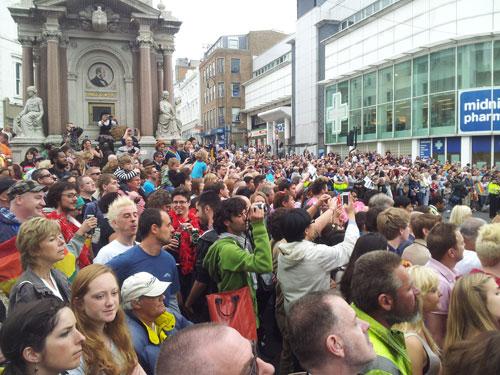
Tens of thousands of people lined the streets for the parade and are expected to descend on Preston Park for the 20th anniversary of Pride today (September 1).
Since last year the event has been ticketed to make it financially sustainable.
It has become traditional for large crowds to gather in St James’s Street for a post-Pride party – though people living in the area have repeatedly complained about the disturbance and the mess left behind.
Many gay people even leave the area for the duration to avoid the event.
For some the day appears to be less of a celebration and more of an excuse for people to get away with doing anything they like.
And news of yesterday’s drug raids (August 31), which were aimed at disrupting the supply of “recreational” drugs to revellers, could reinforce an impression that Pride is simply about a pursuit of naked hedonism.
But for many, including Mr Ralfe, now 58, it is something much more.
He says: “It is more than just a party.
“When I first came out I lost several jobs because I was gay. Today nobody’s the slightest bit interested.
“That is partly because of Pride. It is like a rolling bandwagon of education.”
March history
The Pride parade – which the former organisers had proposed abandoning because of financial pressure – is for many still the most important part of the event.
Melita Dennett was part of the early Pride movement, which started as a campaign against the anti-gay Section 28 law passed in the 1980s.
Protests against the legislation, which forbade the promotion of homosexuality by local authorities or schools, led to an annual march at The Level.
She says: “It was a big deal for a lot of people. For people within the council who publicly declared their sexuality there was a fear they would lose their jobs.
“There was a lot of prejudice about people with AIDS and HIV. People were effectively seen as outcasts from society.
“Pride came through that.”
Over the years the march developed into a parade and carnival.
While Pride has progressively shed its political edge in recent years for many simply holding the event is a political statement in itself.
Melita says: “There is a very good reason for visibility, to make everybody aware that we are a large part of Brighton and Hove.
“Because we have got a relative amount of freedom in this country doesn’t mean we should take it for granted.”
The turbulent recent history of the organisation of Pride has given way to a sense of optimism.
The event and the issues surrounding it still have the power to divide opinion.
Community roots
Some feel the parade has become more about the names of big companies and institutions on the side of the floats than about the lives of the people taking part.
James Ledward, editor of GScene magazine and an organiser of this year’s event, says he values the parade above all else but wants to see it reflect the grassroots of the LGBT community.
However, he said the importance of having police officers and firefighters marching should not be underestimated.
He said: “It is only five years ago that the police first marched at Pride. It changed an awful lot of people’s perceptions about the police.
“The Pride parade, though some may argue that it is reinforcing the stereotypes, is an opportunity for gay people to march, so people can see there are gay people everywhere.
“Pride is a unifying factor. It is the one thing that pulls everybody together once a year.”
Although he was opposed to ticketing he said paid entrance has changed the park party for the better because its meaning to the LGBT community had become diluted by general interest from people in the city.
He said: “It had become an excuse for a drinking session in Preston Park.
“The year before ticketing I went up for 15 minutes and I was offered drugs about six times.
“The demographic was 60% straight, 40% gay.
“Last year, with ticketing, it must have been 80% gay.”
Mr Ledward said the battle for equality for the LGBT community is still going on and it is still important for its issues to be recognised.
He said: “Since New Labour we have had all the legislative changes, gays in the military, civil partnerships.
“The equality agenda has worked for us. We have got the legislation in place but we have never really dealt with the hearts and minds.
“You’ve only got to look at the Catholic Church and their position on gay weddings.
“My partner is Albanian. He comes from a country where it is a massive ‘no no’ to be gay.
“He is going to his first Pride. For me that is what it is about.”
Post Pride party
At 6pm the Gay Village Street party begins, lasting until midnight.
On Sunday Dorset Gardens is being taken over by a community stage and picnic area, as the party continues from 2pm to 8pm.
Performances are also being staged by Pink Fringe in New Steine Gardens.
The following roads are being closed on each day: St James’s Street, Pavilion Street, Princes Street, Steine Street, Manchester Street, Charles Street, Broad Street, Madeira Place, Camelford Street, Margaret Street, Wentworth Street, Devonshire Place, New Steine, St James’s Avenue, Rock Place, Chapel Street, High Street, Cavendish Street, Dorset Gardens, George Street.


Comments: Our rules
We want our comments to be a lively and valuable part of our community - a place where readers can debate and engage with the most important local issues. The ability to comment on our stories is a privilege, not a right, however, and that privilege may be withdrawn if it is abused or misused.
Please report any comments that break our rules.
Read the rules hereLast Updated:
Report this comment Cancel