The Towner’s Ravilious Collection-Is it worth a visit?


This article was written by one of our Young Reporters, a scheme that gives 14 to 18-year-old school students a chance to write for a real newspaper. Find out more at the Young Reporter website.
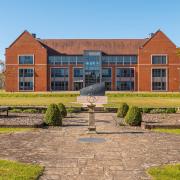
The Towner considers Eric Ravilious an important artist, holding many events regarding him, not to mention their collection of his works of “about 900 pieces” according to a Towner employee.
But why and what keeps this early 20th century artist important to modern-day Eastbourne, even Sussex?
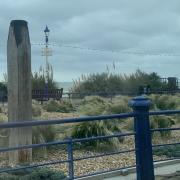
Matthew Penny, a volunteer turned employee says, “It’s the subject matter around him locally.” Ravilious’s most notable artworks are local watercolour pieces like Cuckmere Haven and Beachy Head, but he was diverse, doing wooden engravings, printmaking, and other art forms.
The free collection offers his many works, but also a personal insight into his life, offering letters, notebooks, a library dedicated to books related him, and a timeline of his life on the wall.
Eric Ravilious was born in London,1903 and raised in Eastbourne, attending the Royal College of Art in 1922, studying design.
There, he met artists like Edward Bawden, wife Peggy Angus and Ravilious’s wife Tirzah Garwood, the four becoming close friends.
The collection contains many works highlighting areas they would spend time, such as the piece Newt Pond (1932).
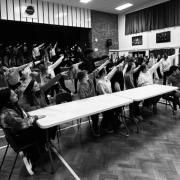
An interesting aspect of the collection is the space they provide visitors to engage, with regular in-depth talks being hosted.
The Towner employee hosting the talk, who wishes to stay anonymous, started with engaging trivia regarding tea, getting laughs out visitors.
Then going on to describe Ravilious’s personal life with his wife, whom ‘he taught to make a cuppa tea’.
Onto his work with Wedgewood, pottery and porcelain manufacturer, Ravilious created unique collections.
Tea sets were ‘transfer painted’, meaning engraved copper was used to print from paper, pressed onto a ceramic piece, being able to transfer intricate patterns onto mugs.
Collections made using this were the ‘Coronation’ series, changed from ‘ER’ to ‘GR’ due to Edward VIII’s abdication, the ‘Alphabet’ series, each letter assigned an object, as well many other series he did with Wedgewood.
Penny noted on the variety of Ravilious’s works. “He worked during the war”, being an Observer Corps post during WW2, “As well as a war artist,”
He produced paintings surrounding airfields and aircraft in his signature watercolour, lending his works to 1937 exhibition “Artists Against Fascism”, some pieces now in the Collection.
“(He did) Not just local (paintings)” On Ravilious’s works on Eastbourne such as the White Horse, “...He’s quite sort of prolific.”
Matthew Penny reflected on Ravilious’s tragic death at 39 in 1942, after he joined a search for a missing plane and never returned.
The Towner employee who gave the talk stated that during his life, Ravilious thought his least interesting artworks were the ones that were chosen.
“(The collection) …Not only celebrates him, but it celebrates Sussex and it celebrates watercolour.” She said in confidence. “Because what he did for watercolour is pretty inspired. We’ve got a collection of around 5000…Lots of British artists particularly but Ravilious is such a key part of that force.”
“It’s important that people come to see his works.” Penny remarked. “And (here) they’re all in one place.”